CRIA.TUA
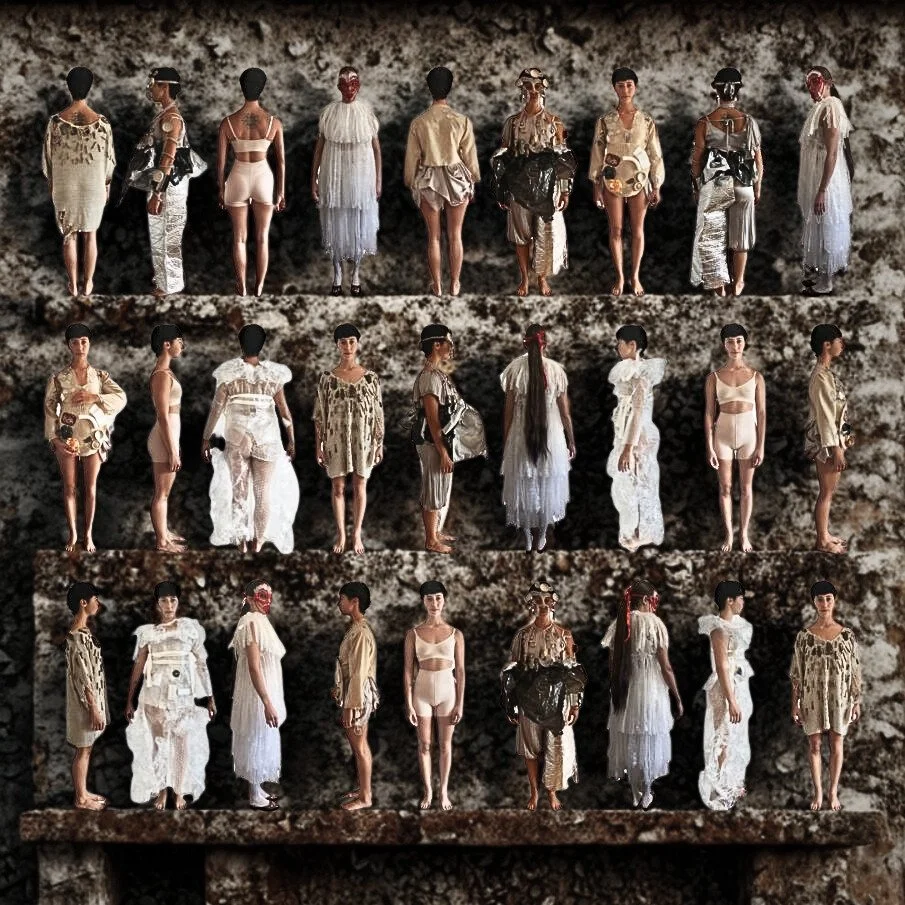
CRIA.TUA is an interdisciplinary project by Pirii Pimentel Rodrigues that brings together performance, sound, body, and costume. The name is a wordplay on the Portuguese word “criatura”; without the “r,” it means “create your own”—your own scene, form, or existence.
The project emphasizes experimentation, craftsmanship, and sustainability by recycling materials such as plastic, aluminum, and glass and incorporating them into costumes that also function as sound instruments. Created in collaboration with Maria Martinez, these costumes act as extensions of the body, while Gian Kaegi developed an instrument for the first performance that is also used in educational projects.
CRIA.TUA consists of five performances—Terra, Água, Fogo, Ar, and Essência—which represent a cycle of metamorphosis. Each performance is an independent creature and at the same time part of a larger performative organism. The audience is invited to experience the creative process in real time—to see, hear, and feel it.
The aim of the project is to expand the perception of contemporary performance, encourage reflection on cultural consumption and collective experience, and offer a space for creative experimentation and learning. Due to the positive feedback, CRIA.TUA is planned to be further developed.
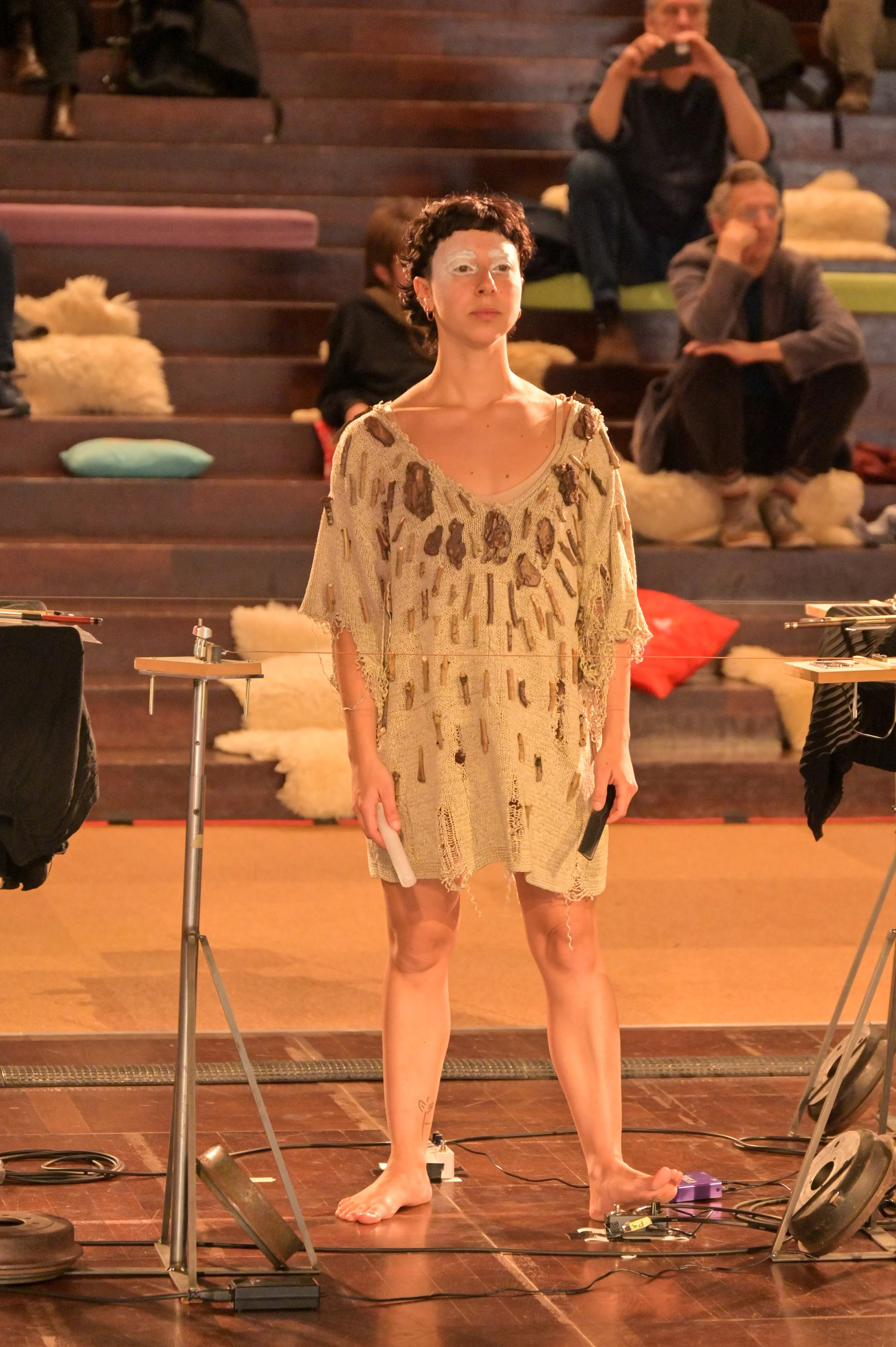
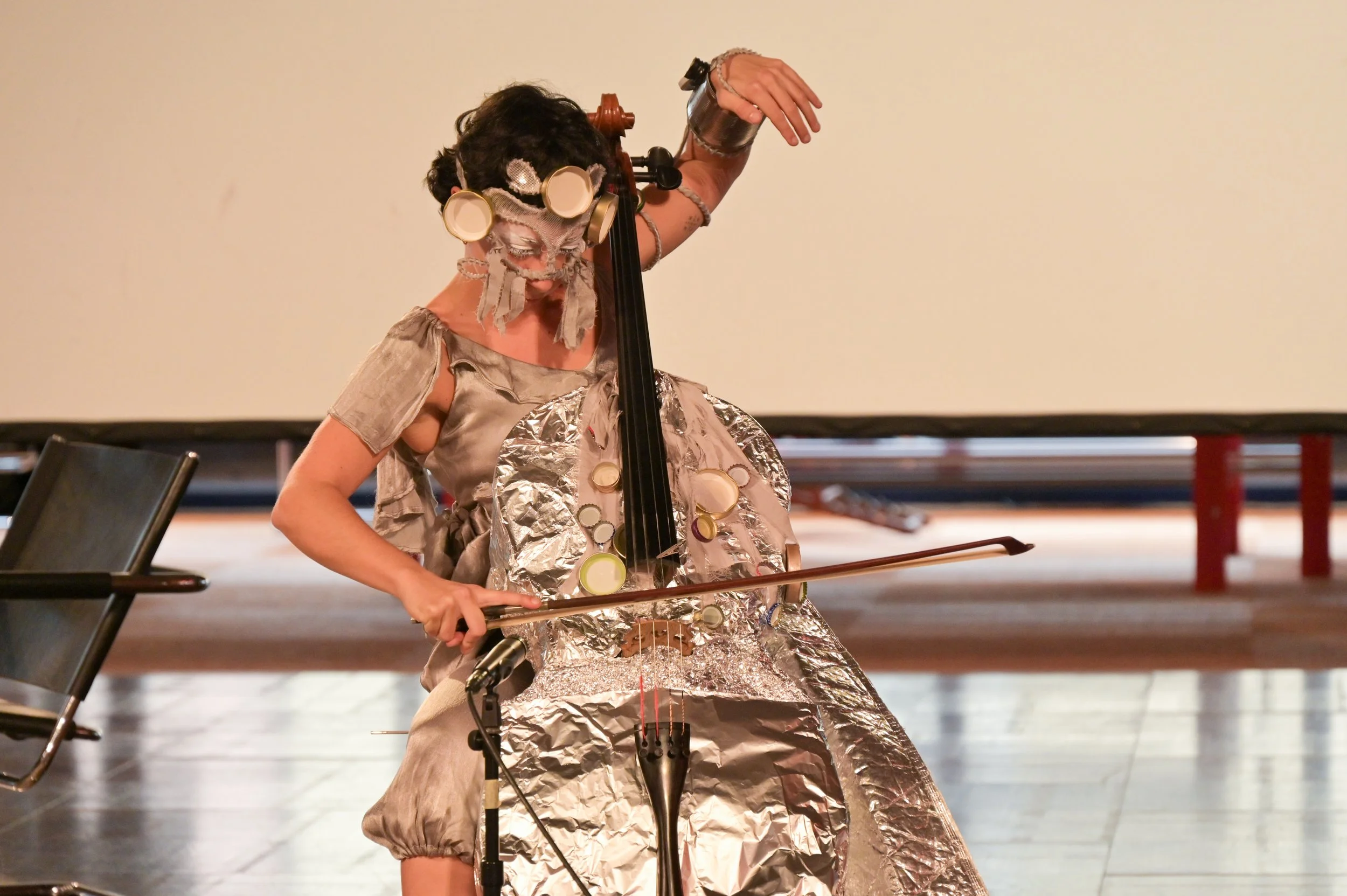
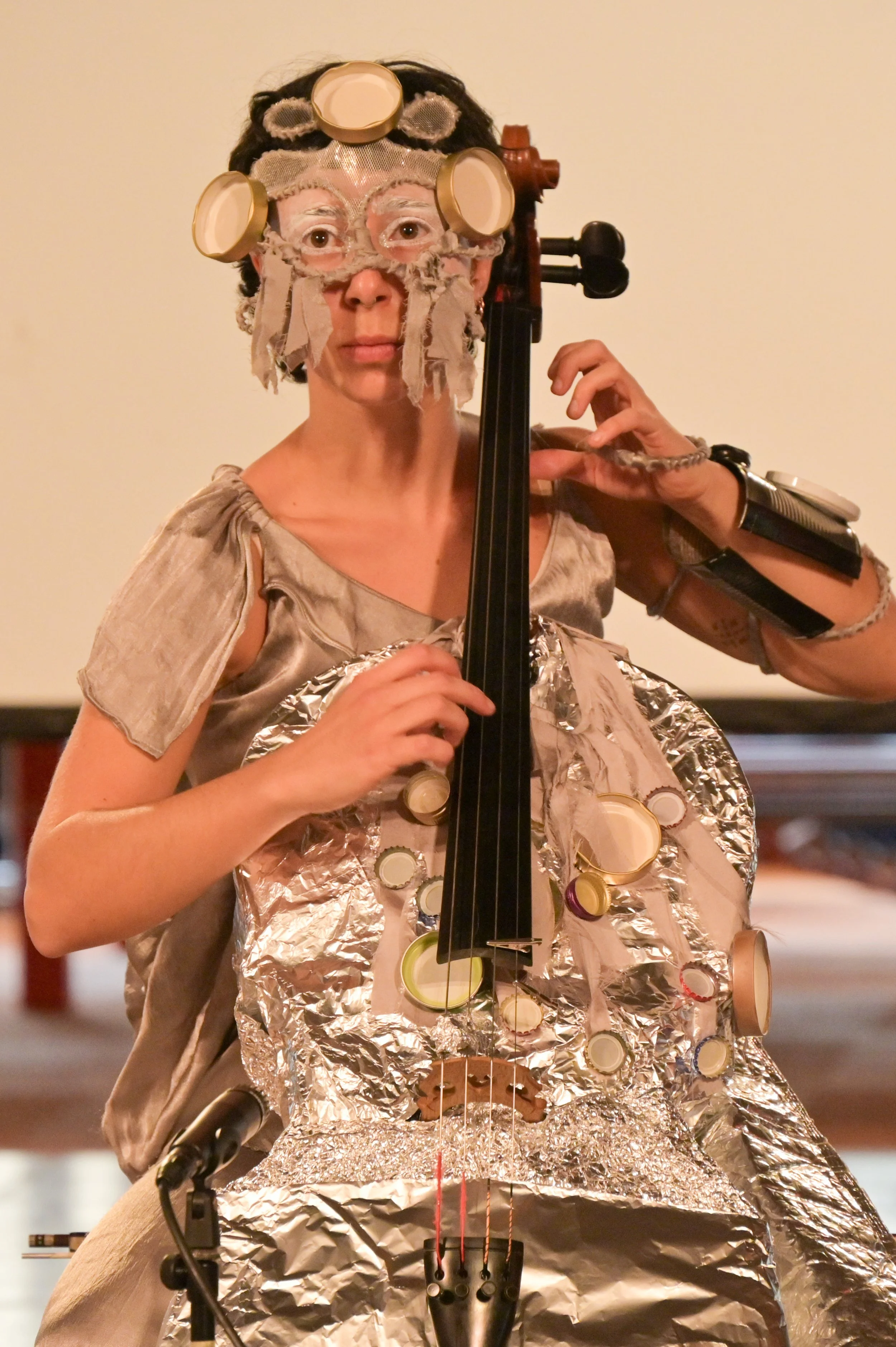
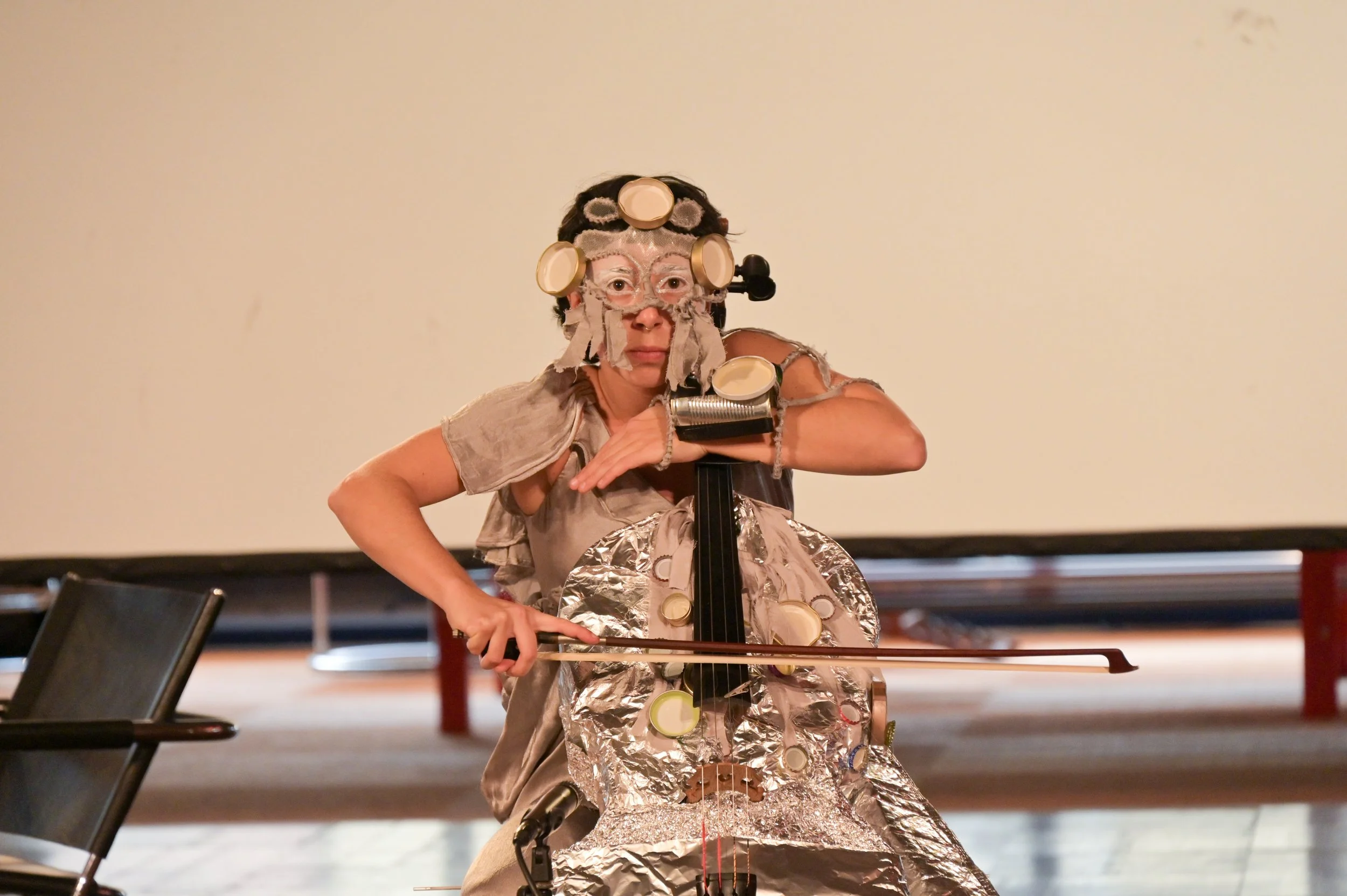
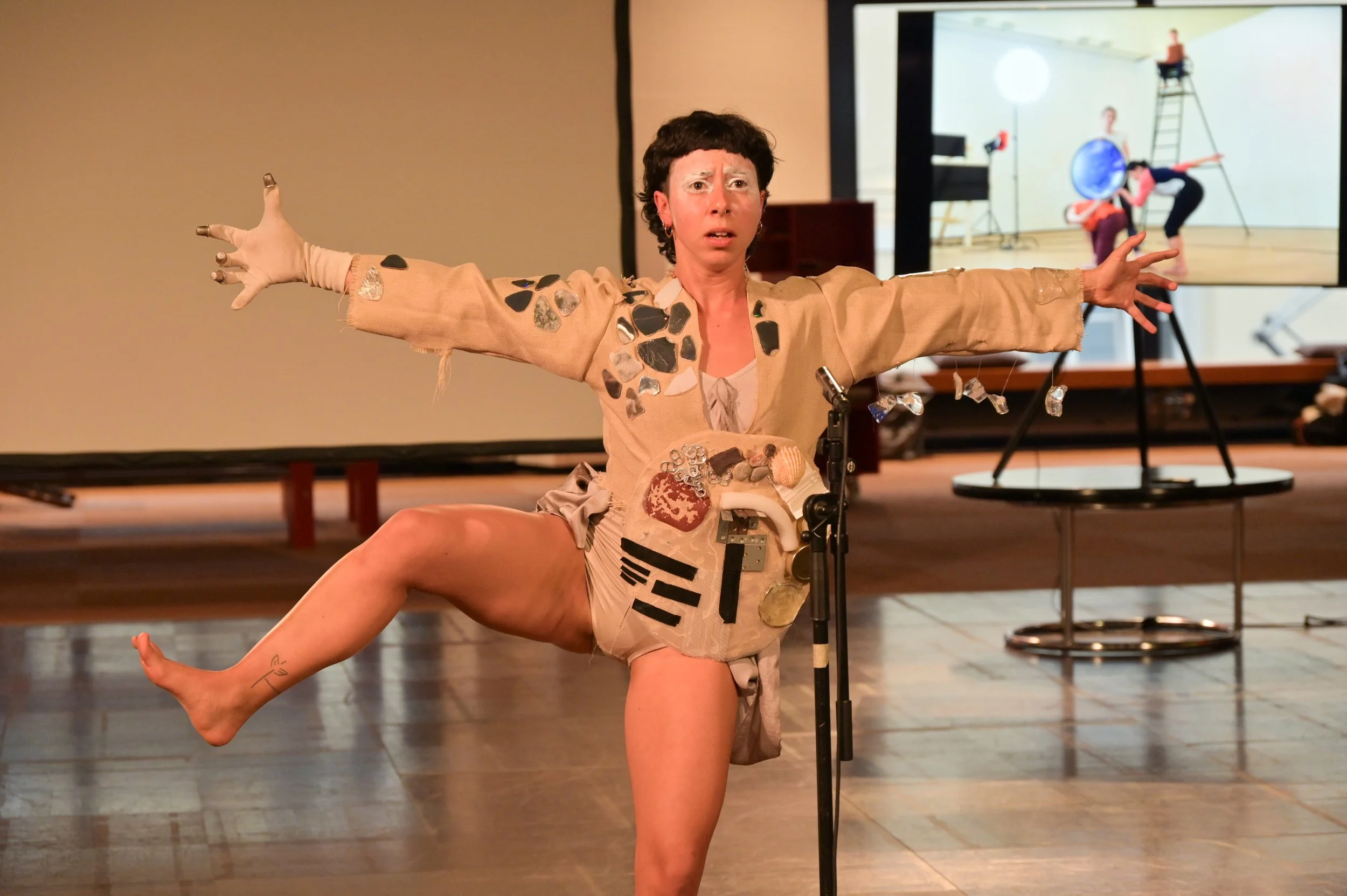
photo by Pedro Borges Ferreira
Live performances, broadcast by Radio X on October 25, 2025, with technical support from Clemens Fiechter.
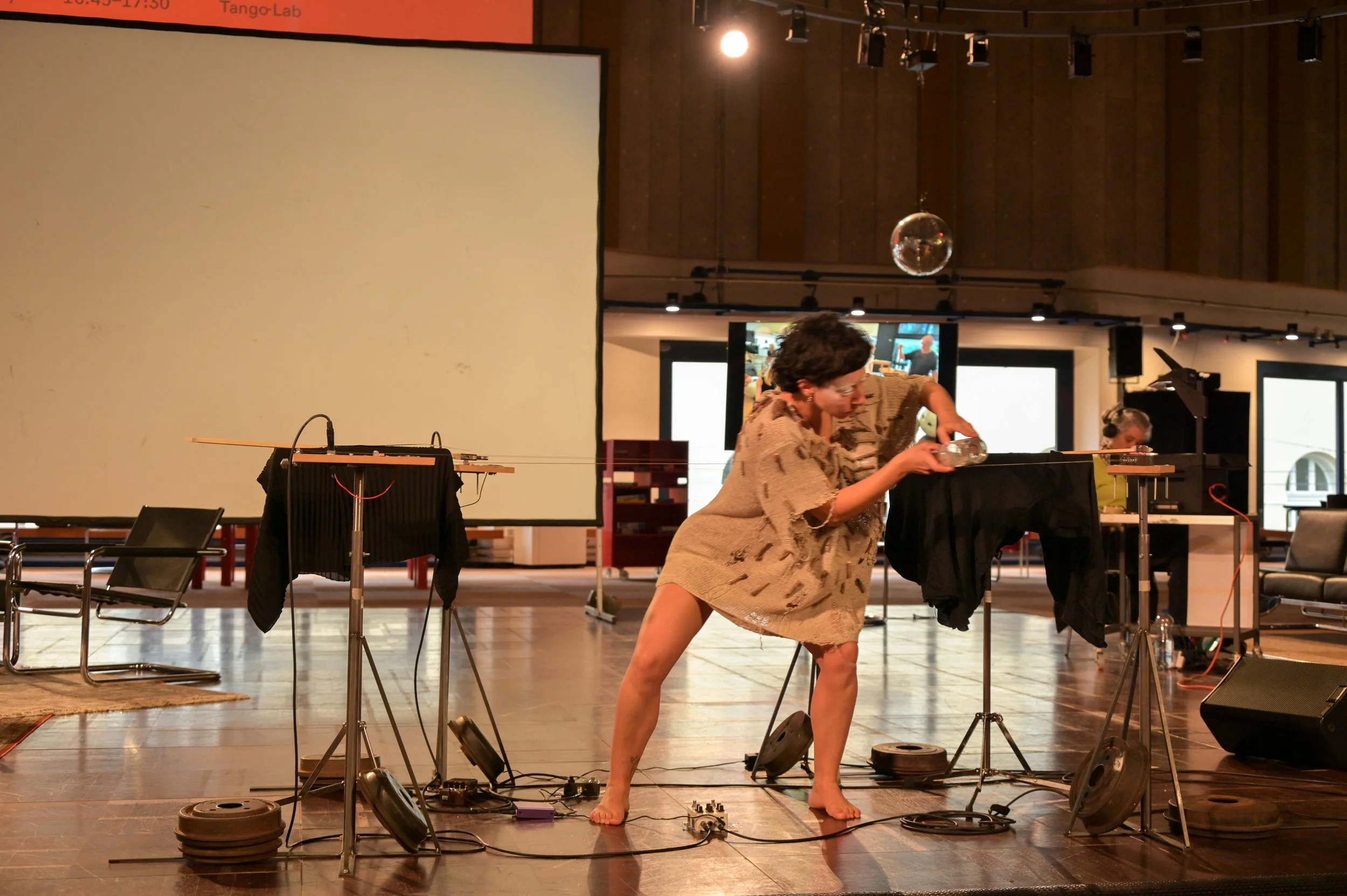
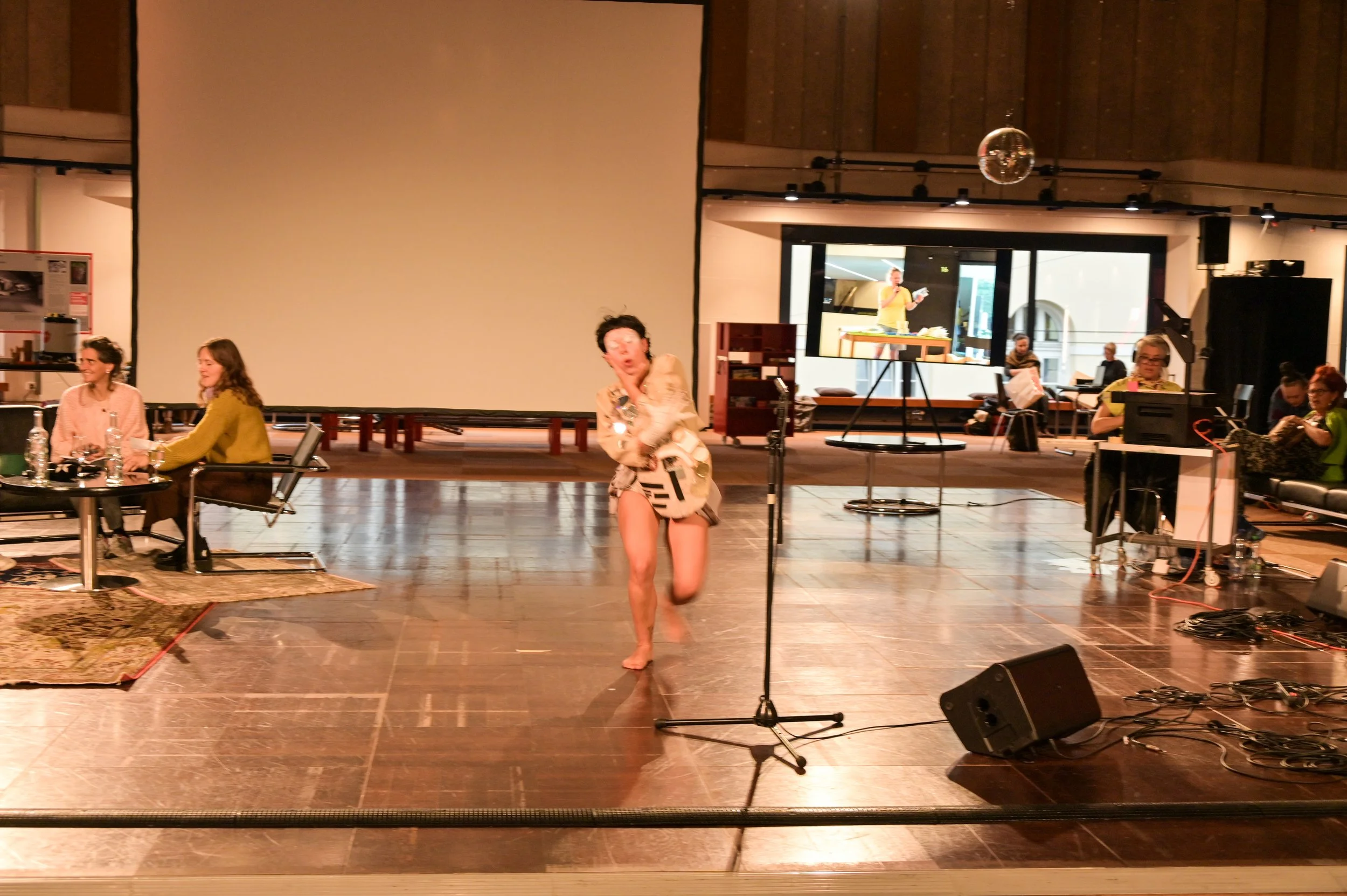
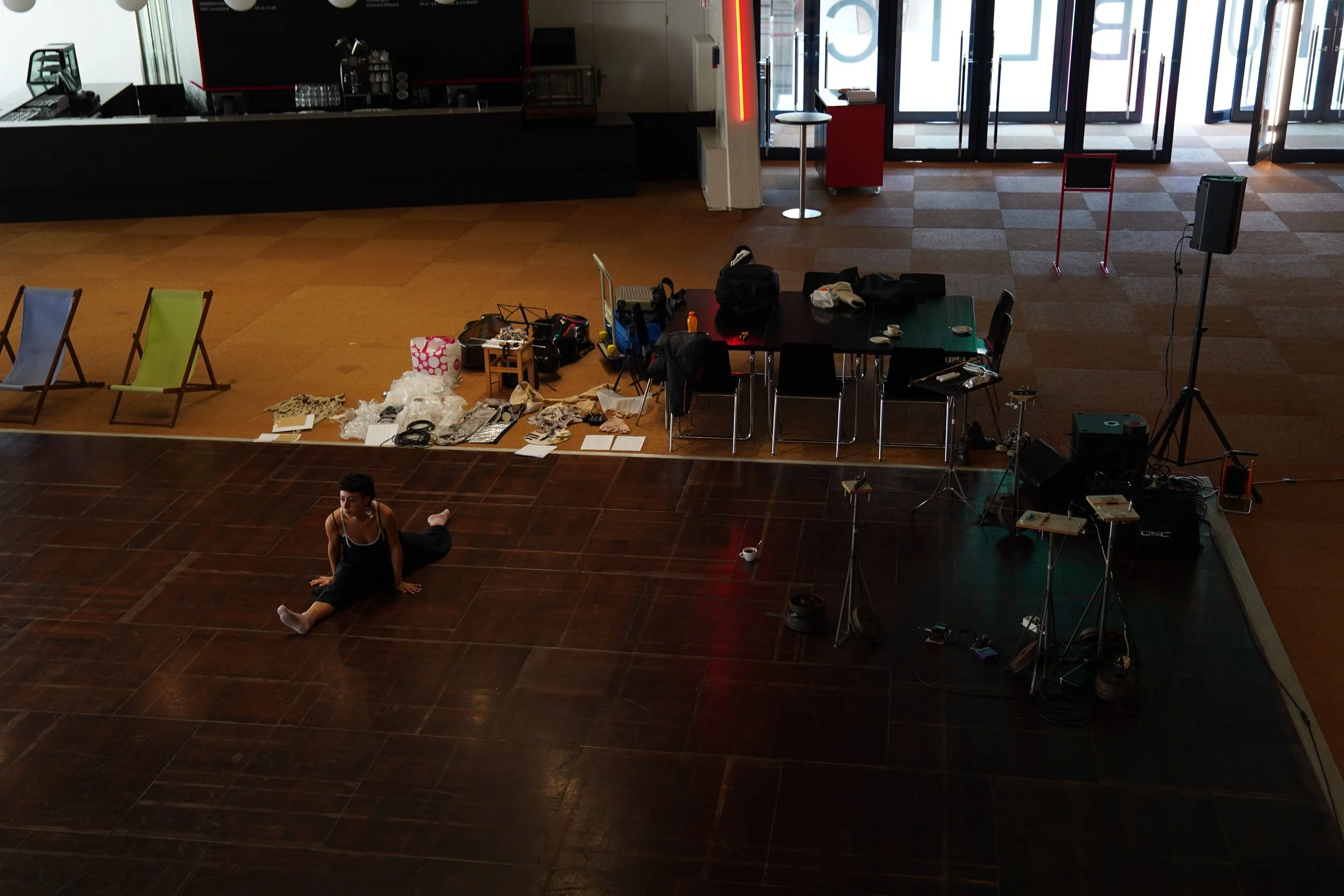
Recorded in the foyer of Theater Basel as part of the opening event for Lesebuch Revolving Histories – On Translocal Performance Art in Switzerland
a solo project supported by
Willy A. und Hedwig Bachofen-Henn-Stiftung
LuzernPlus, Fuka-Fonds Luzern,
Radio X
Theater Basel
CRIA.TUA in Katalog für Sammlung Performance Kunst Schweiz https://mediathek.hgk.fhnw.ch/performance/detail/bangbang-40307/de
Performance I/V
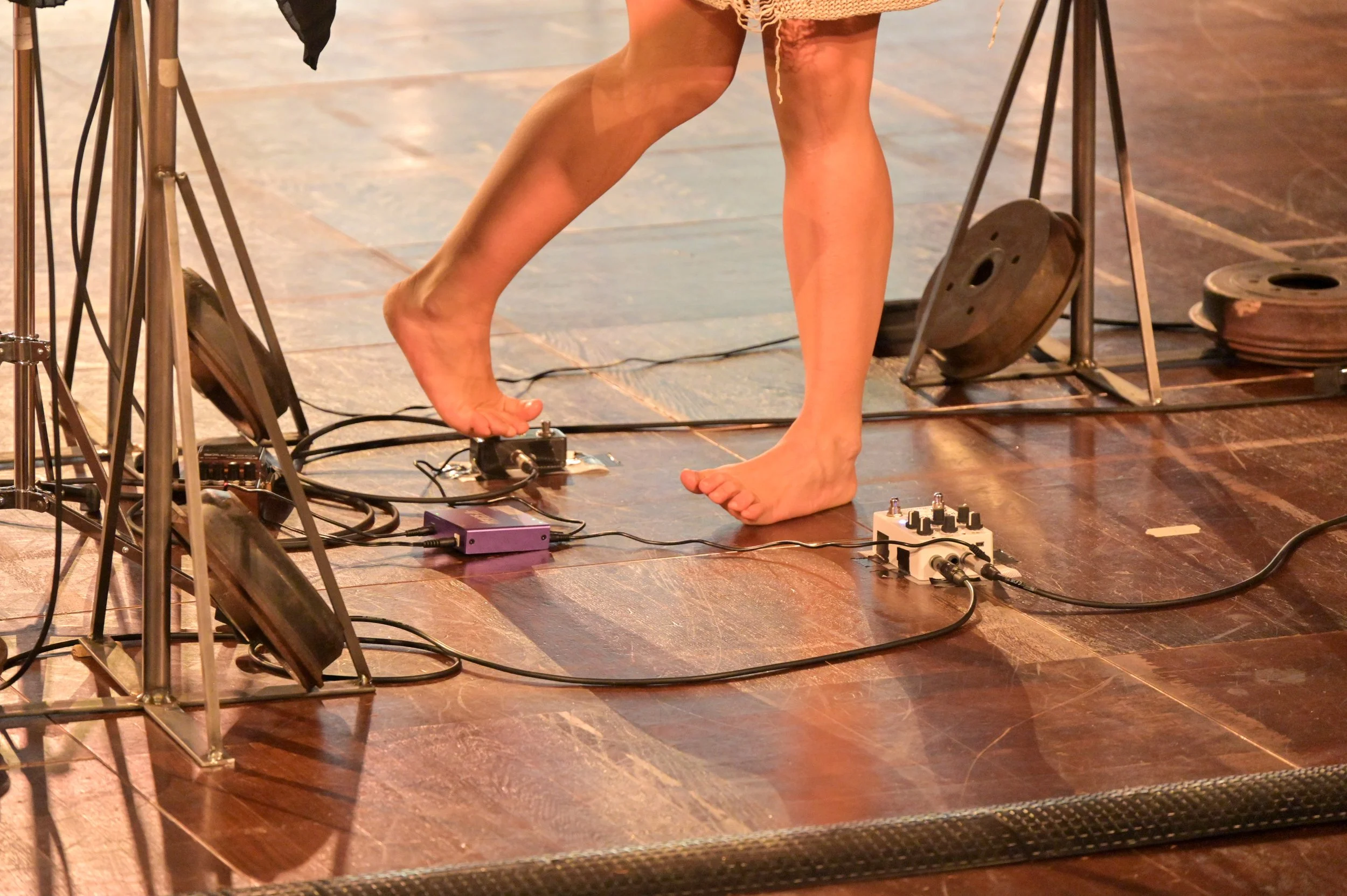
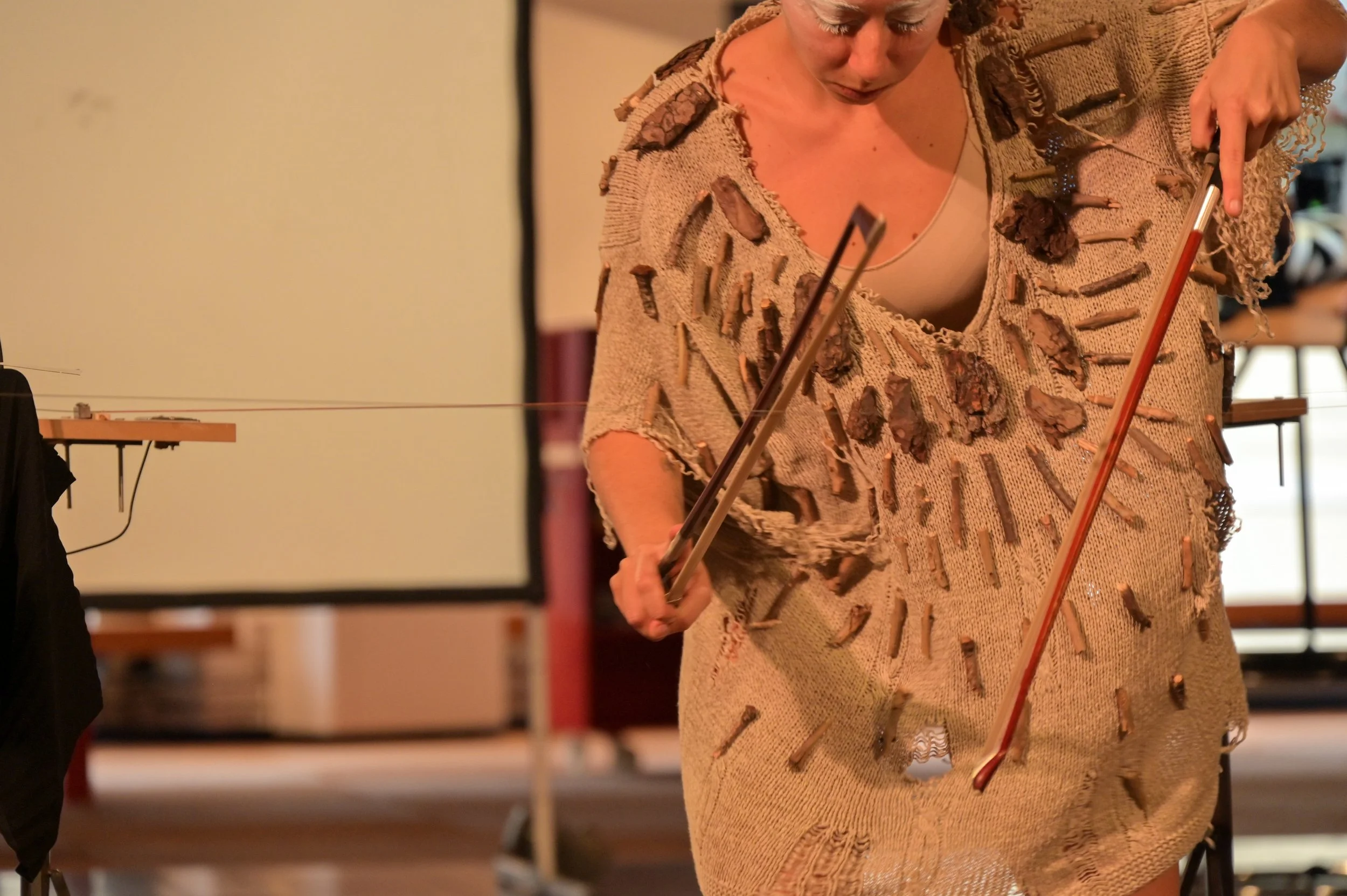
In the first performance of CRIA.TUA, the element Earth ("Terra") represents birth—the transformation of myself into a being. At the center of a structure made of two long-string instruments, I embodied the core of the planet and slowly rotated around myself. This circular movement reflects the Earth’s rotation as well as the cycle of time and life. The instrument, created in collaboration with Gian Kaegi, is played with various materials—plastic, aluminum, glass, and bows—and further processed through effects pedals. This performance introduces the central elements that will shape the subsequent performances. The costume was made by Maria Martinez, crafted from wool, tree bark, and small branches. Every sound—scraped, rubbed, brought into vibration—reflects the connection between humans and natural matter, but also its manipulation and the traces of pollution that it leaves behind. Recorded on 23 October 2025 at noef noef Atelier, Luzern (Switzerland) by La Pataconera.
Performance II/V
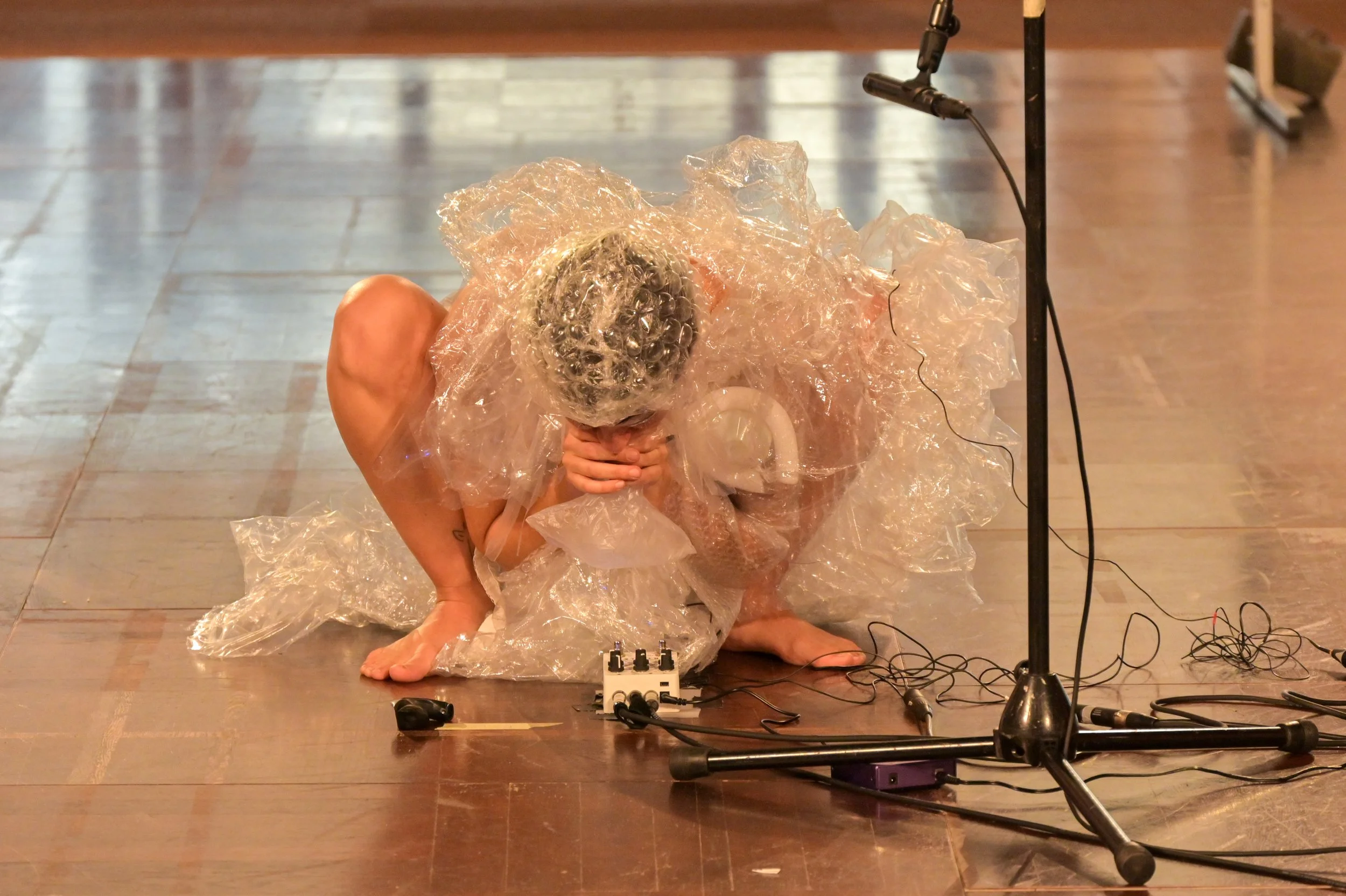
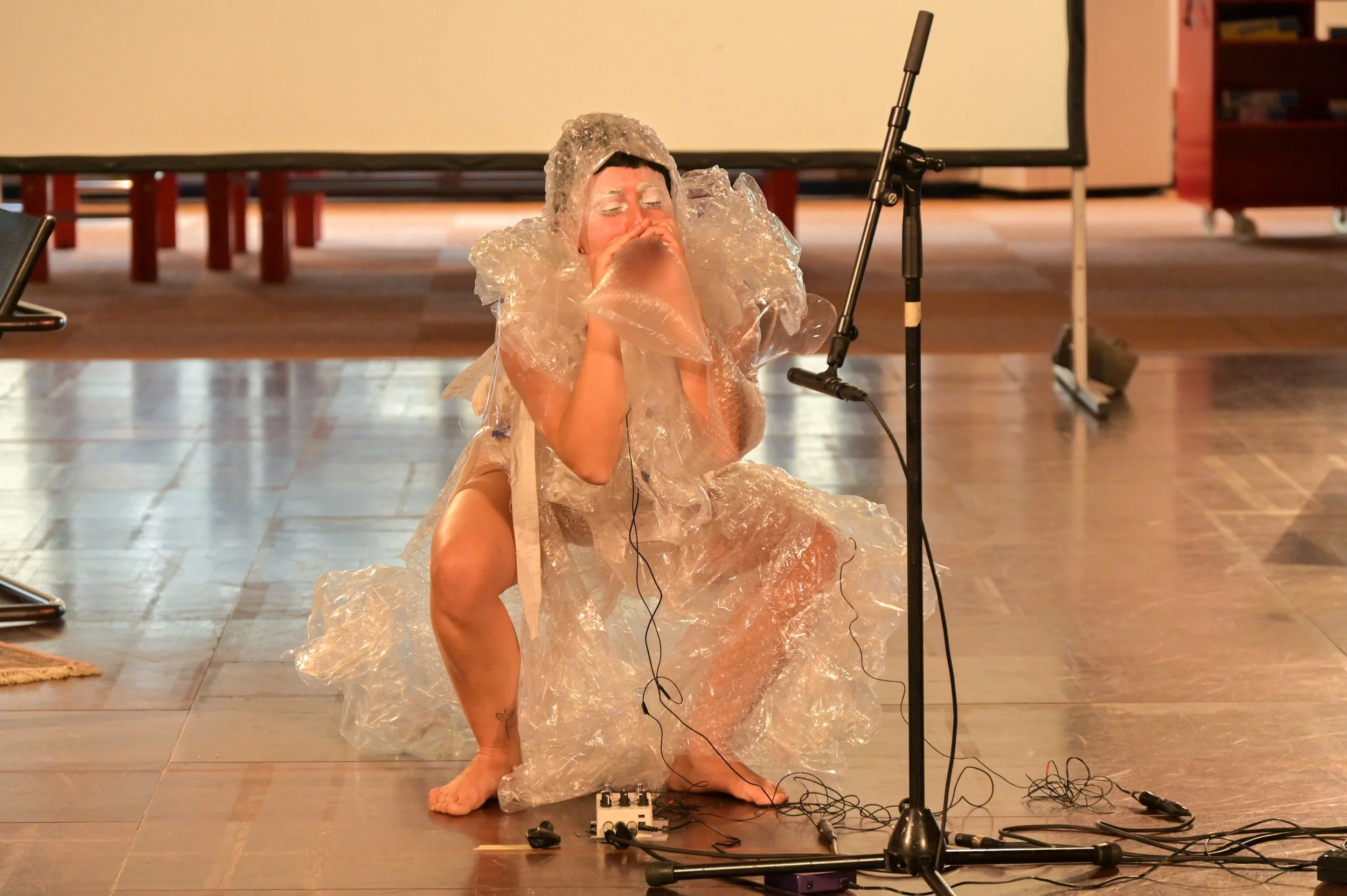
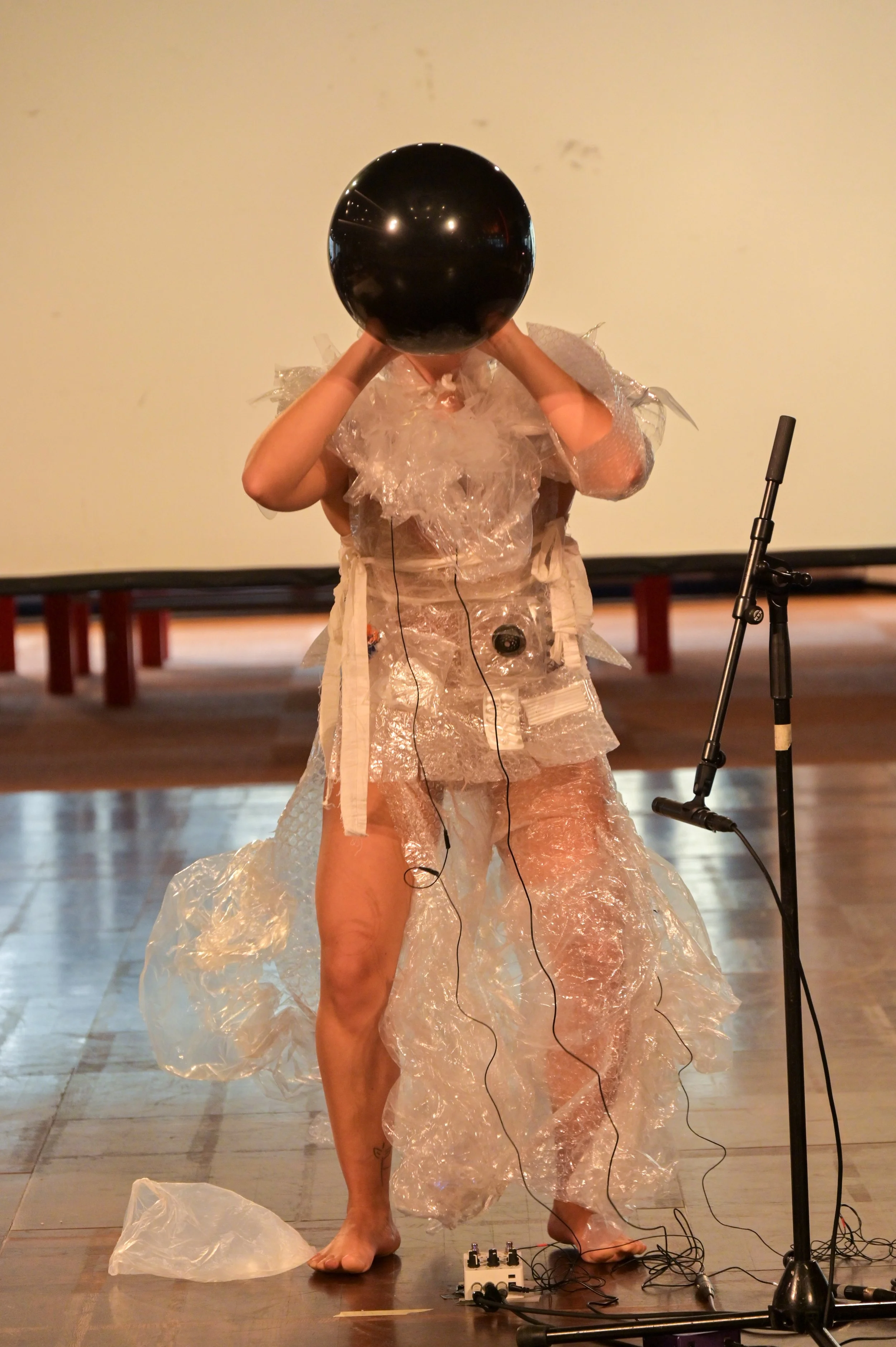
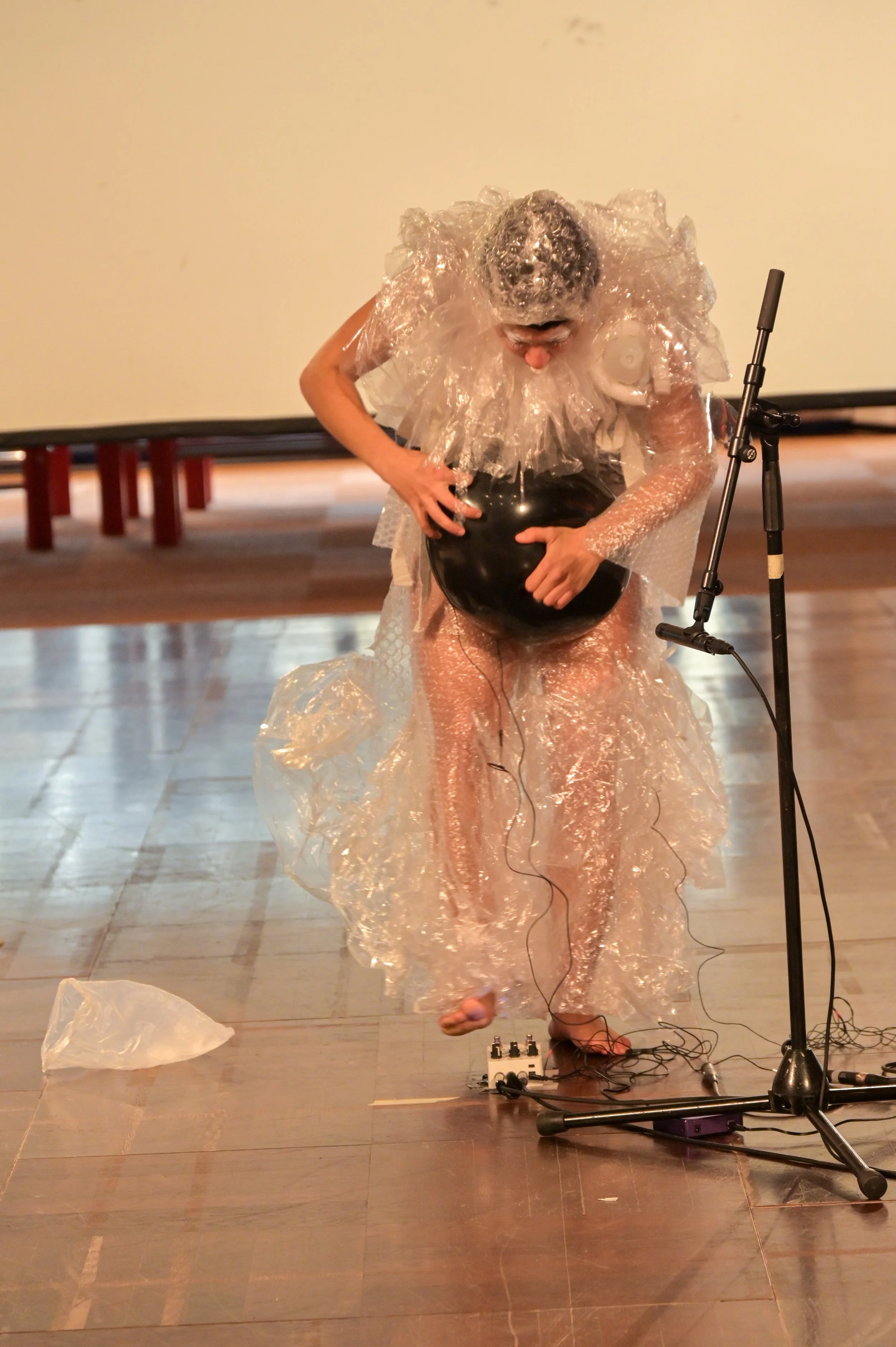
The performance “Água” refers to the element of water. The costume, created in collaboration with the artist Maria Martinez, uses plastic as its central material—not only because of its light-transmitting qualities, which recall the play of light underwater, but also as a symbol of the pollution that inhabits our oceans. This costume transforms the artist Pirii Pimentel Rodrigues not only into a layer of waste—a kind of creature struggling to breathe—but also functions as a sound instrument within the performance. The garment envelops Pirii like a cloak made of remnants, assembled as a collage of layers of translucent plastic, bubble wrap, blister packaging, sleeves, and industrial plastic leftovers. Between sound and silence, “Água” becomes a sonic portrait of the fragility of both body and nature, in which breathing signifies resistance and plastic paradoxically becomes both an instrument of life and a means of suffocation. Recorded on 23 October 2025 at noef noef Atelier, Luzern (Switzerland) by La Pataconera.
Performance III/V
The third performance of CRIA.TUA represents the element of fire and pays tribute to nature, which is destroyed by the recurring forest fires in Portugal during the summer. Yet fire symbolizes not only destruction, but also fusion and transformation. In “Fogo”, the artist and performer Pirii Pimentel Rodrigues and her cello become a single entity. The costume, developed in collaboration with the artist Maria Martinez, uses aluminum as its main material, extending to the cello itself, which is also wrapped in aluminum foil and decorated with a chain of lids and bottle caps. The aluminum reflects and dazzles, transforming the light into visual flames, while the cello resonates with a metallic vibration. Recorded on 23 October 2025 at noef noef Atelier, Luzern (Switzerland) by La Pataconera.
Performance IV/V
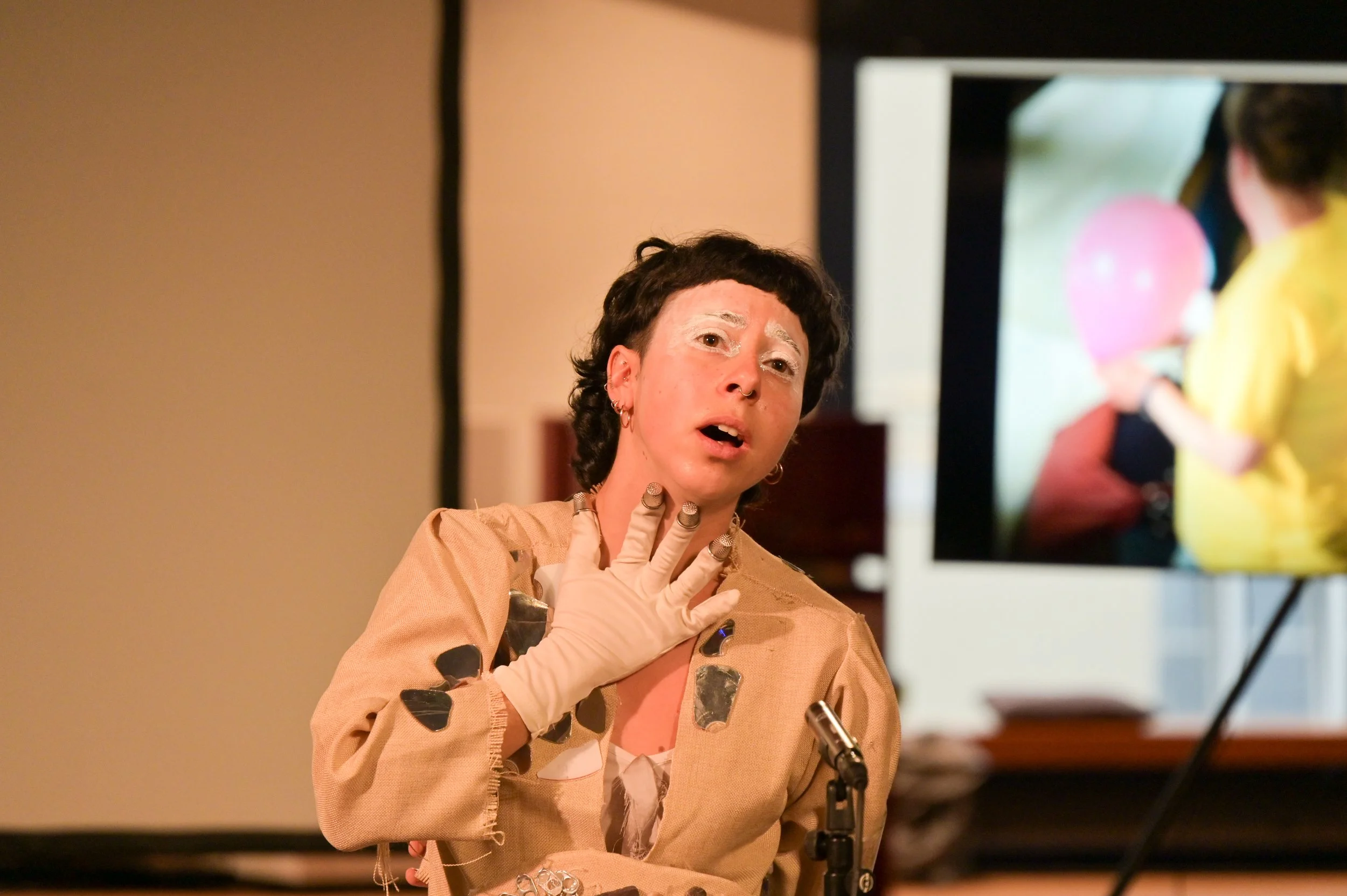
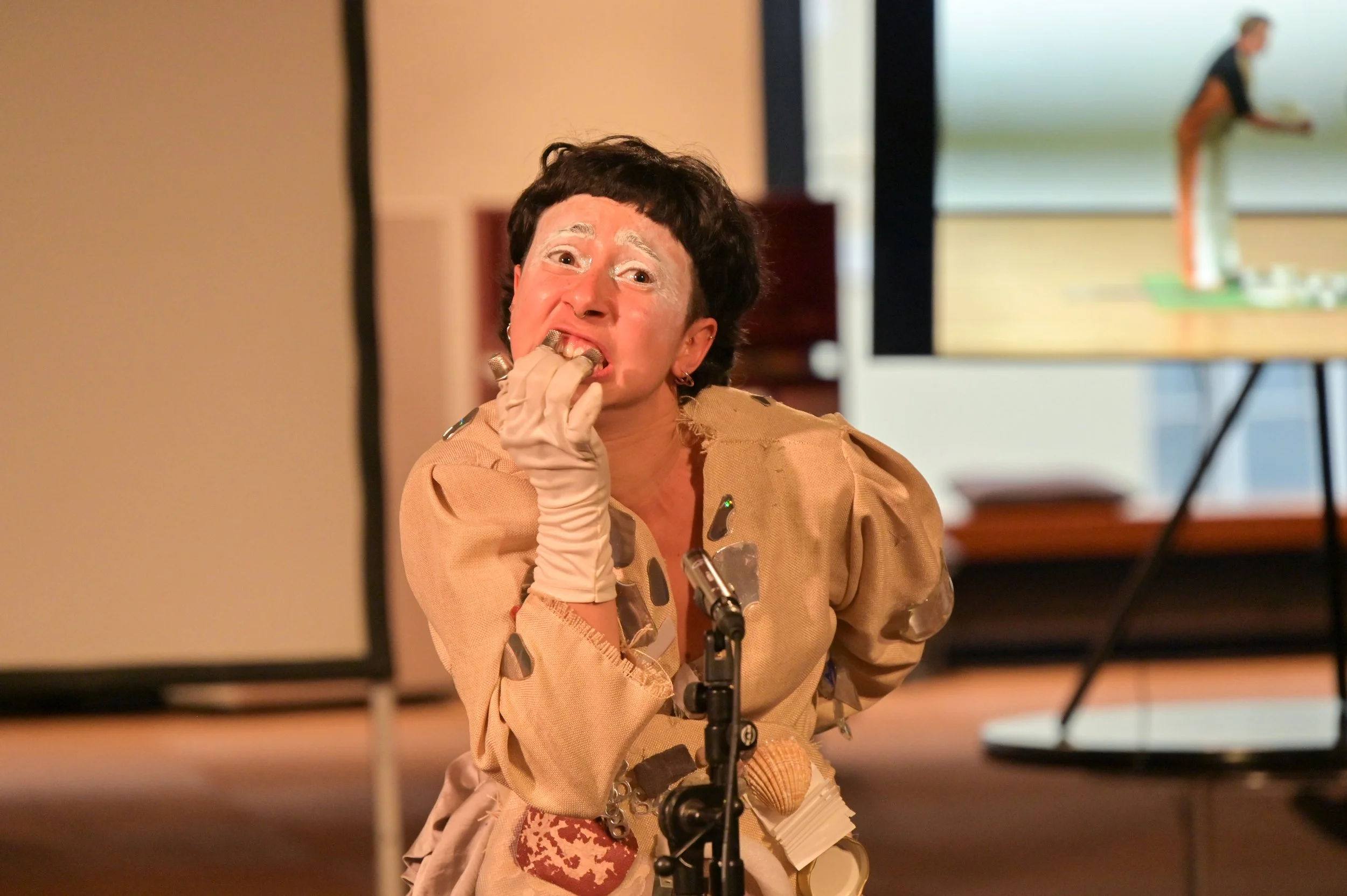
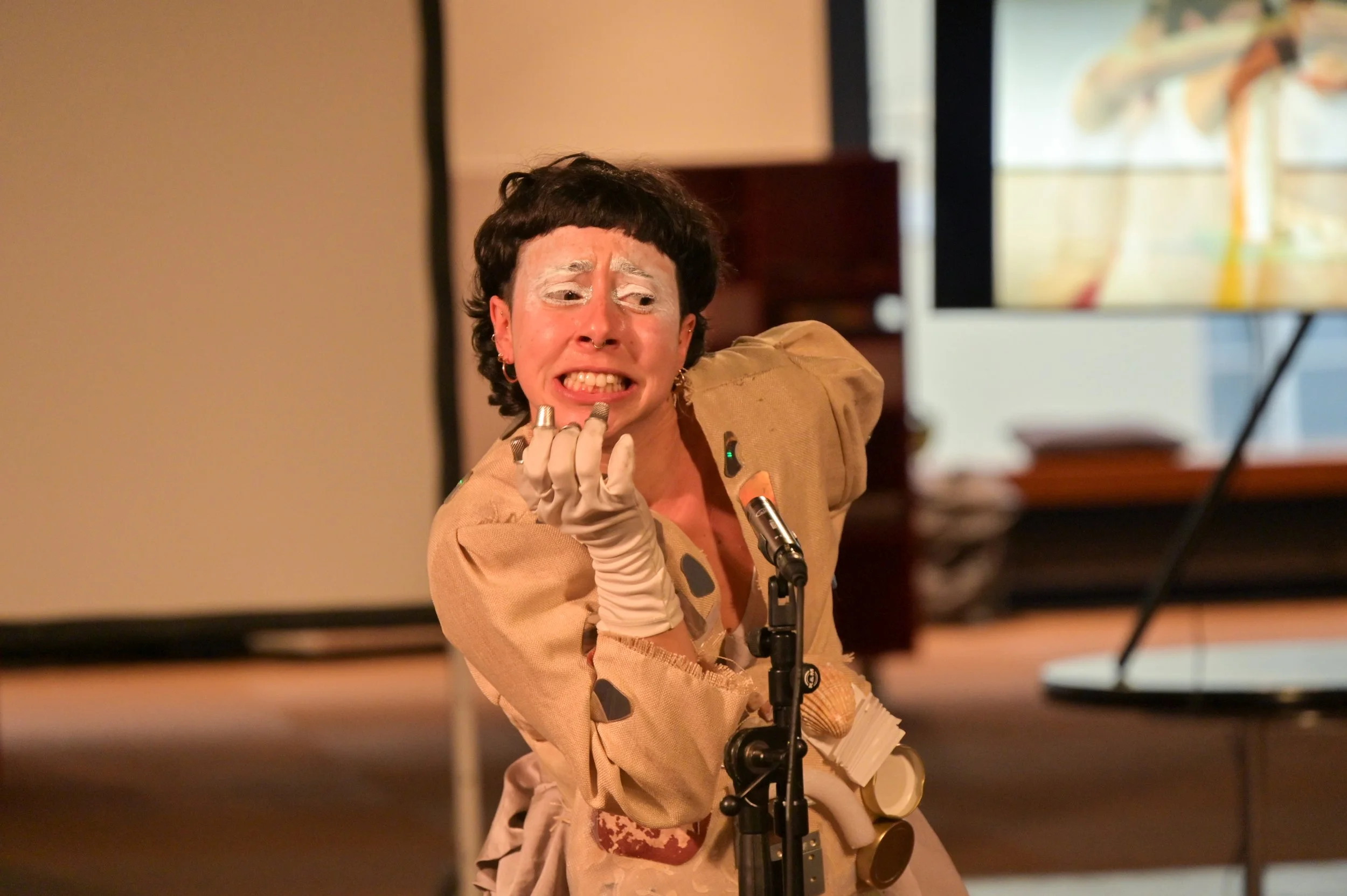
The fourth performance represents the element of air. The costume, developed in collaboration with the artist Maria Martinez, uses glass as its central material, giving an acoustic voice to the movements. The garment also incorporates elements such as linen and old CDs, which create reflections and plays of light that move along with the body. The costume includes a round, movable element in the abdominal area, inspired by the work of Michael Maierhof. This “belly” functions not only as a sonic center that brings together elements from all the previous performances, but also as a symbol of the feminine—the act of creating and transforming life within. This additional element produces a sonic fusion and represents femininity and the cycle of life: the belly from which life emerges and is shaped, connecting creation and transformation. The glass, fragile and translucent, reflects the tension between balance and fracture and transforms the performer’s sound and movement into a manifestation of air, breath, and the delicate tension of existence. Pirii also uses her voice and breathing for physical and musical explorations of tension and release.
Performance V/V
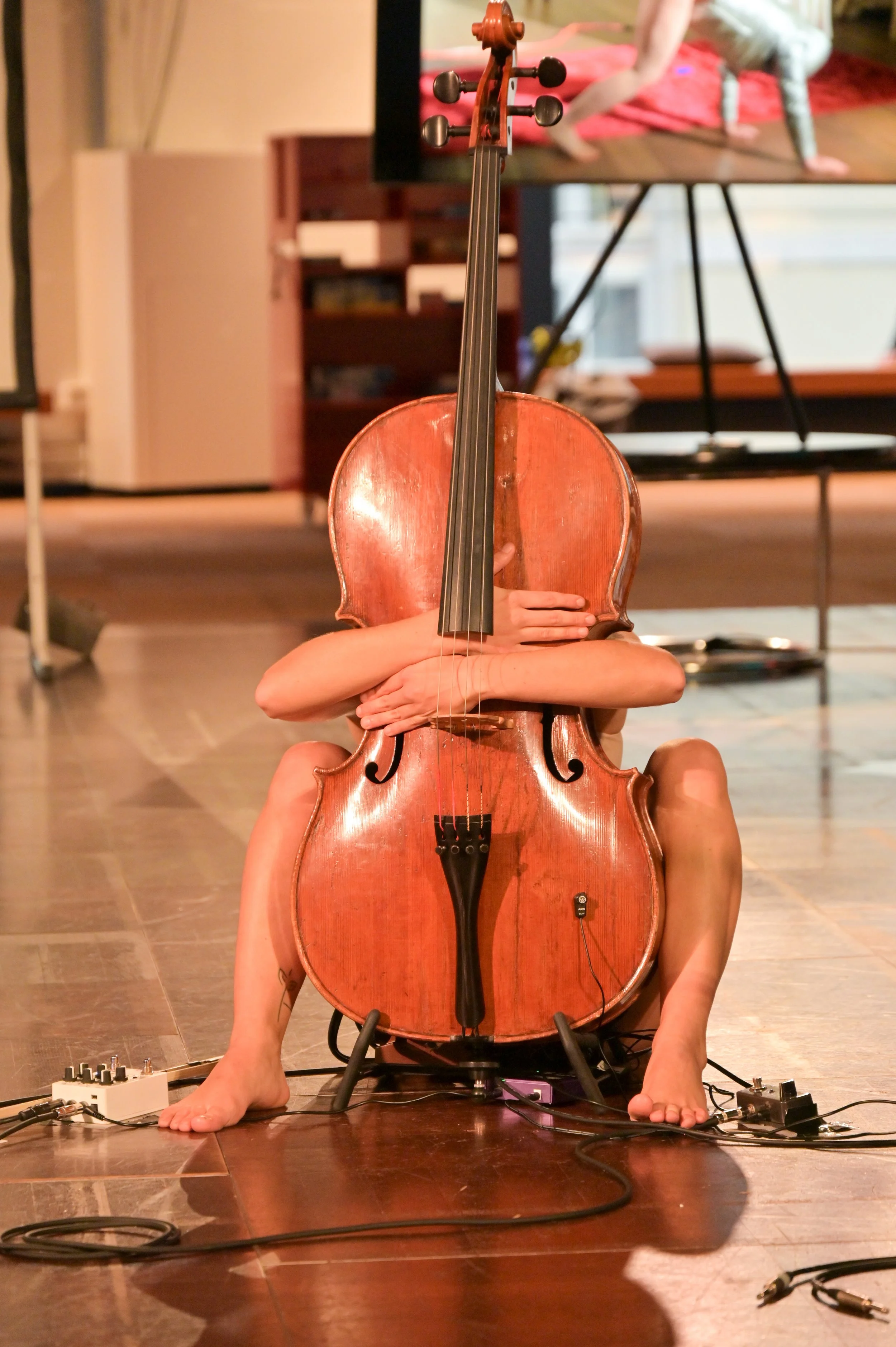
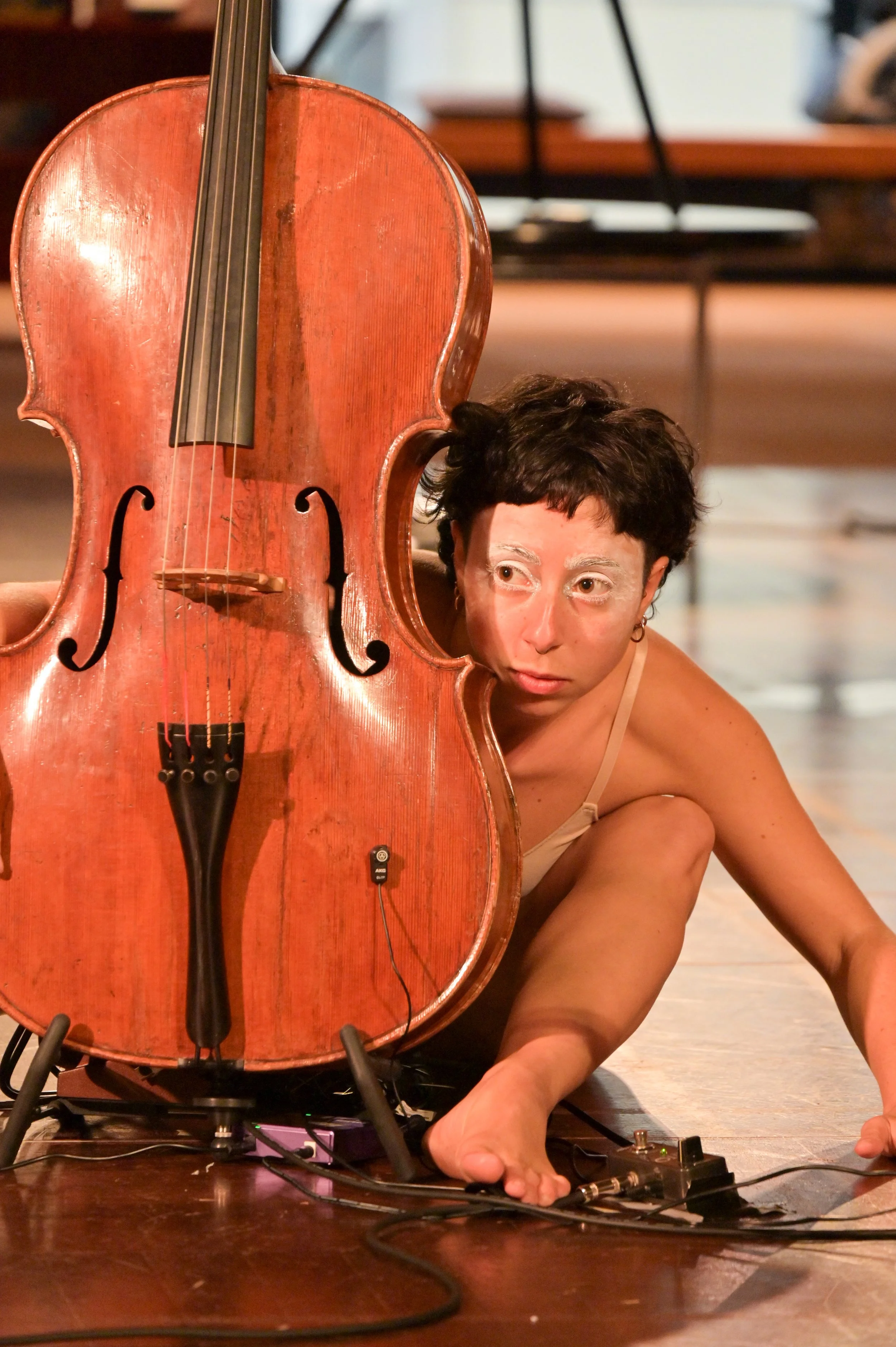
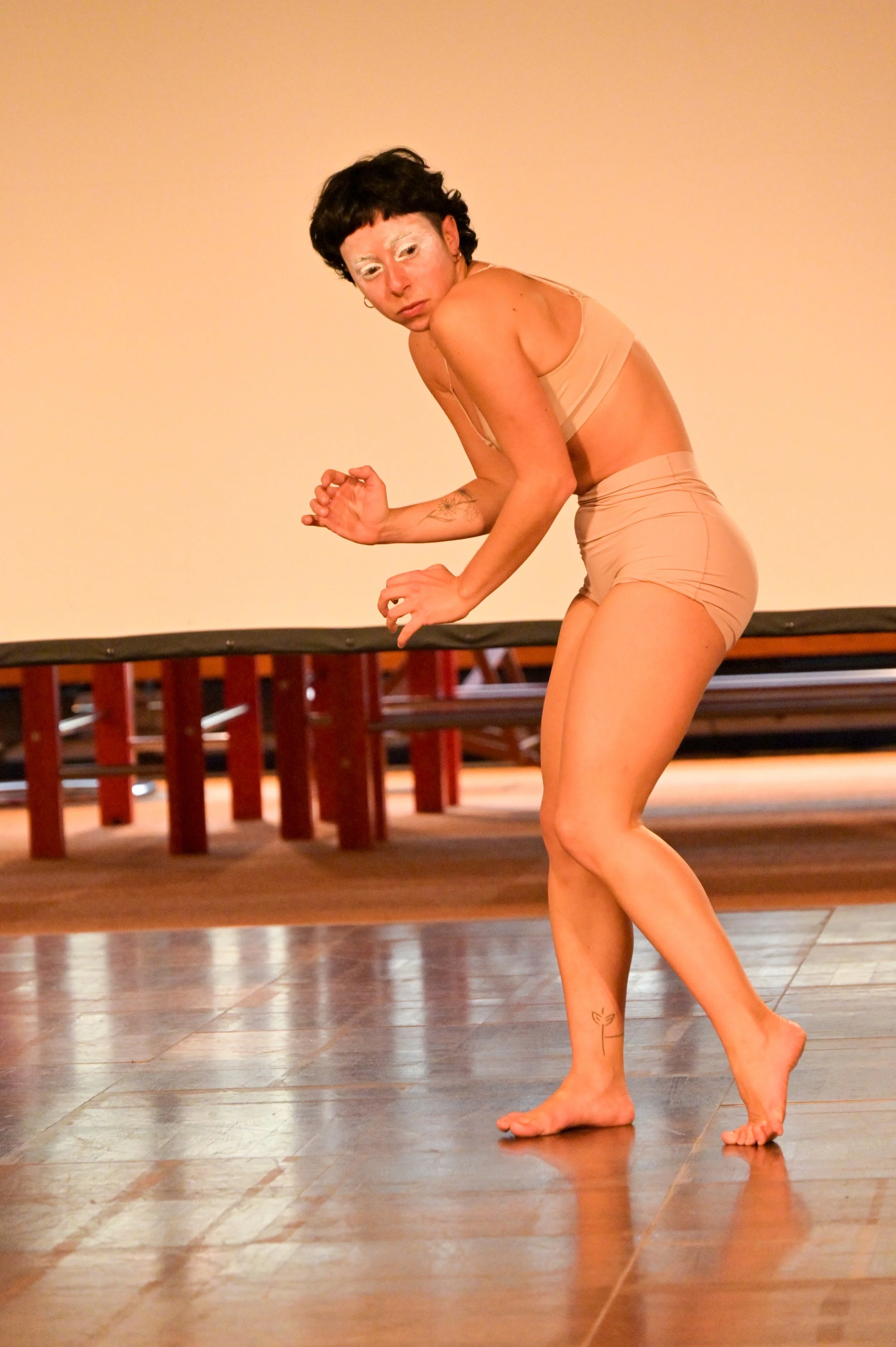
In this performance, titled Essência, Pirii Pimentel Rodrigues wears a nude-colored costume that symbolizes the shedding of all outer layers—naked, raw, and unmasked. At the beginning, the artist is hidden behind the cello, with only her legs and arms visible, as if the instrument itself were alive and represented the true creature. Sounds from the wooden resonant body are processed through effect pedals. The entire performance evolves to the point where the cello ultimately continues playing on its own, and the creature that was initially inside the instrument emerges. From this body of sound, a stripped-bare soul arises, which then only observes the instrument—as if it were the last remaining element of Mother Nature.
The last CRIA.TUA
Special thank you to Pedro Borges Ferreira, who stood by my side throughout this entire learning journey — through every high and every low. Thank you for never letting me give up, for always lifting me up, for your constant motivation, your new ideas, and above all, your love.
Thank you as well, my dear friend Maria Martinez for accepting this invitation and for all your support and sharing the stage with me.
Thank to all other friends and family that were there for this new beginning.
Recorded by Lapataconera at Noef Noef Atelier
Luzern, 23.10.2025